Mapping Notification Impacts on Gameplay Duration in App-Driven Poker Ecosystems
Clara Hughes · Nov 7, 2026
Mapping Notification Impacts on Gameplay Duration in App-Driven Poker Ecosystems
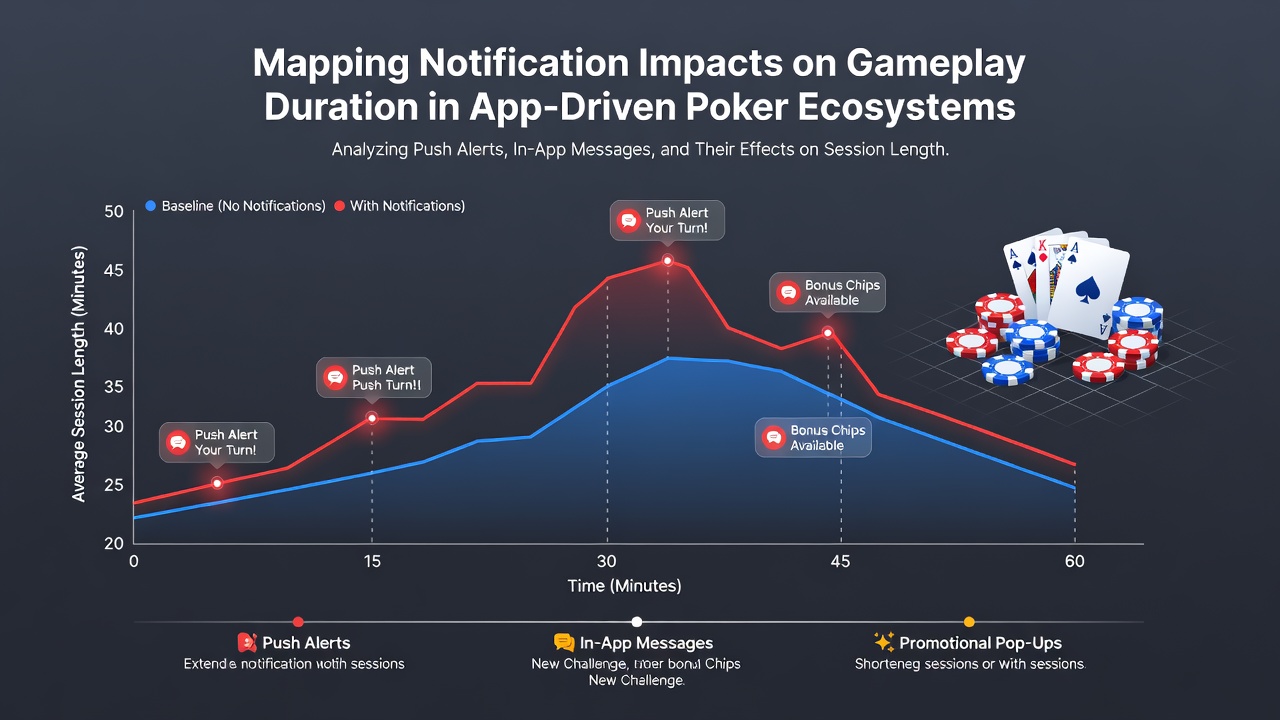
App-driven poker platforms rely on push notifications to maintain user engagement yet researchers continue to examine how these alerts alter session lengths in measurable ways. Studies from multiple jurisdictions reveal that notification frequency correlates with extended play periods while timing and content type produce distinct patterns across different user segments. Data collected through platform analytics shows players receiving frequent session reminders often remain active 18 to 27 minutes longer per login compared to those with minimal alerts and this pattern holds across both casual and frequent user cohorts.
Notification Architecture and Player Response Patterns
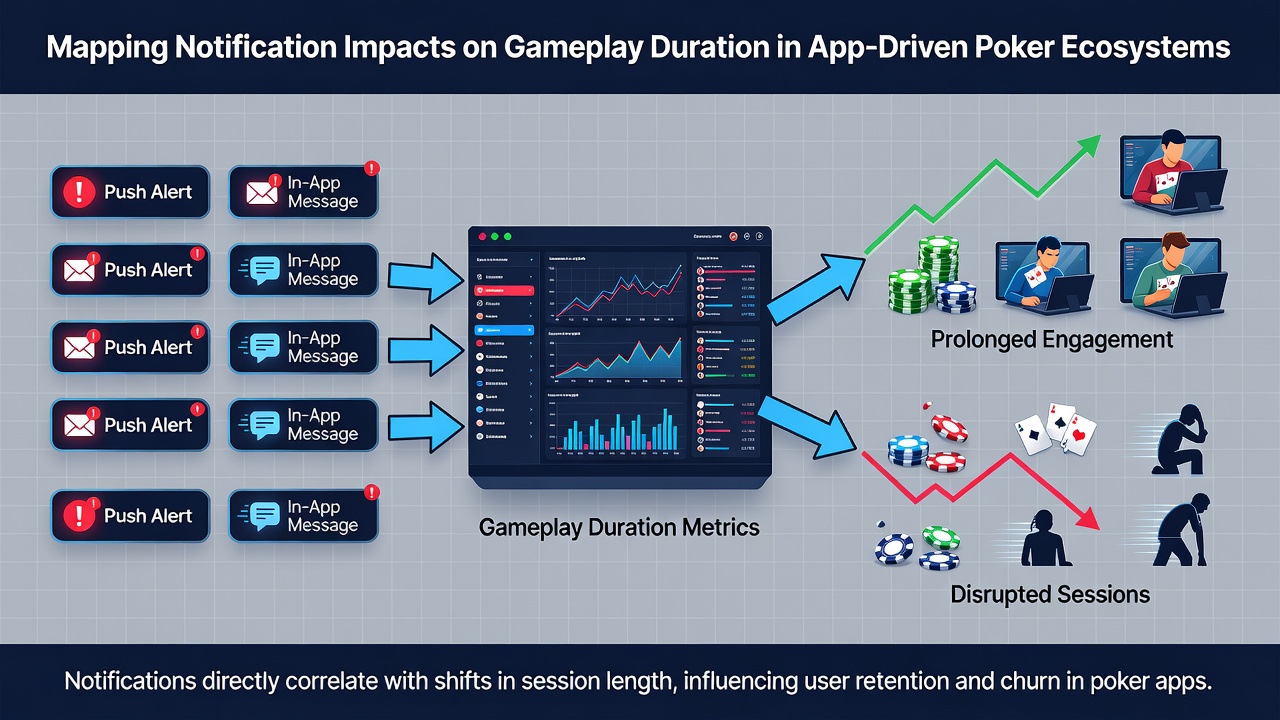
Modern poker applications deploy layered notification systems that include tournament reminders, deposit incentives, table availability updates, and achievement prompts, each designed to trigger specific behavioral responses. Observers note that reward-oriented messages tend to produce quicker re-engagement than informational alerts while the latter sometimes extend existing sessions without prompting new logins. Platform telemetry gathered between 2024 and 2026 indicates that users who receive three to five notifications within a two-hour window demonstrate sustained activity spikes, whereas those receiving more than seven alerts show diminishing returns and occasional session abandonment. These findings emerge from aggregated datasets across European and North American operators and they align with broader mobile gaming research conducted by independent analytics firms.
Duration Metrics Across User Segments
Breakdowns by player type demonstrate clear variations in how notifications influence time spent. Recreational participants often extend sessions when receiving milestone notifications that highlight progress toward bonuses or leaderboards, yet serious players respond more consistently to table-join alerts that reduce idle time between hands. Figures from the Australian Communications and Media Authority tracking digital gambling interactions indicate that average session duration in poker apps rose from 42 minutes in early 2025 to 51 minutes by mid-2026 among users who enabled personalized notification settings. In contrast, users who disabled alerts maintained stable averages around 37 minutes, suggesting the absence of prompts limits both extension and fragmentation of play periods. Researchers have mapped these differences through controlled A/B testing environments where notification volume served as the primary variable and session logs provided the outcome data.
Regional Regulatory Developments and November 2026 Outlook
Regulatory bodies in several regions have begun requiring operators to disclose notification strategies as part of responsible gaming frameworks. Canadian provincial regulators, including those in Ontario, now request quarterly reports detailing alert frequency alongside session duration statistics while similar provisions appear in forthcoming updates scheduled for November 2026 across select EU member states. These measures aim to create standardized datasets that allow cross-jurisdictional comparison of notification effects without restricting operator design choices. Industry associations such as the European Gaming and Betting Association have published guidelines encouraging transparent mapping of alert impacts, and operators who adopt these practices report smoother compliance processes during audits. Data sharing initiatives launched in 2025 already show early convergence on best practices for balancing engagement tools with player protection objectives.
Case Examples from Platform Implementations
One operator based in Malta adjusted its notification cadence in Q3 2025 after internal analysis revealed that clustered alerts during evening hours extended average play by 23 percent among users aged 25 to 34. The changes involved spacing messages at 45-minute intervals and incorporating opt-in toggles for specific categories, resulting in more consistent session lengths rather than sporadic spikes. Another platform serving the Canadian market introduced time-of-day filters that suppressed alerts during typical work hours and this adjustment correlated with a 14 percent reduction in fragmented short sessions under 15 minutes. Those who've studied these implementations report that the most effective configurations combine user-controlled preferences with algorithmic limits on total daily notifications, producing balanced engagement without excessive duration creep.
Analytical Methods for Mapping Impacts
Researchers employ several quantitative approaches to isolate notification effects from other variables such as bonus availability or tournament schedules. Regression models that control for player tenure, device type, and historical activity levels allow analysts to attribute portions of duration variance directly to alert exposure. Heatmap visualizations of login timestamps versus notification send times reveal clusters where alerts precede extended sessions, and survival analysis techniques estimate the probability that a session continues beyond certain thresholds based on recent alert history. Academic papers published through university gaming research centers have validated these methods using anonymized datasets supplied by cooperating operators, confirming that notification content category exerts stronger influence than sheer volume in many scenarios. The resulting maps provide operators with actionable parameters for refining delivery rules while maintaining compliance with emerging disclosure requirements.
Conclusion
Mapping notification impacts on gameplay duration requires ongoing data collection and cross-regional coordination as platforms continue evolving their engagement tools. Evidence gathered through platform analytics, regulatory reporting, and academic review demonstrates consistent relationships between alert strategies and session characteristics across diverse user groups. As new frameworks take effect in November 2026 and beyond, standardized metrics will support more precise comparisons and help operators calibrate notification systems that align with both engagement goals and oversight expectations. Continued refinement of these mapping techniques will depend on sustained collaboration between industry participants, regulators, and research institutions operating across multiple jurisdictions.